Showing posts with label science. Show all posts

Tuesday, September 22, 2015

Australia Needs Better Science

For this post I thought I'd delve into politics for a bit, a change of topic from my other posts.

At its heart scientific progression requires funding. Even with ample manpower the scientific community has, it requires funds to do research, do experimentations and further current knowledge. Under the current Australian government there appears to be a deficit when it comes to the allocation of government funds to research initiatives. As a first world nation aiming to be at the forefront of research and development in all of the major fields of science, Australia needs its government to make scientific funding a priority. 

The role of scientific policy is not as influential as it should be. In the face of increasing global acceptance of climate change the Australian government needs to be able to access well documented research to make informed decisions. These informed decisions are likely to result in the reduction of unnecessary costs, particularly valuable given that Australia has at current a financial deficit. However this is difficult to achieve if the scientific community is being chocked by a lack of funding. The scientific community as a whole also needs to be given more spotlight on its contribution to society to increase awareness and build stronger relations between it and the wider public. 

If I were to provide a recommendation to increase scientific exposure, I would say that the first and most important thing this government needs to do is create an ‘untouchable’ reserve of funds far greater than the current $20 billion in place. The initial outlay of cash would, I believe, result in major future savings. Despite increased costs, as discussed by Australian Chief Scientist Professor Ian Chubb, “future generations also need a future”(Chubb, 2014) and this future requires strong scientific faculties. In medicine, engineering, biomedical fields and many more, scientific progression yields more efficient ways of doing things. In turn these improved methods and practices are certainly going to streamline production and health care, which are currently major consumers of government funds and encourage more people to enter scientific fields.

Thanks for reading and if you have any thoughts, please write them in the comments section below.

Sources:

CHUBB, P. I. 2014. Need a 'whole of government' approach to science. In: ALBERIC, E. (ed.) ABC Lateline.

Sunday, September 13, 2015

An Arm, A Finger And A Couple Of Ears Please

Here is an idea to consider. According to Zacks.com, 3D printing is taking off at the moment, having "only just brushed the surface of its potential applications, and looks set to take off in a big way in the near future". Today and into the future we wont just be able to 3D print a scale model of you house, but something much more important and life changing. Organs, limbs and skin.

Despite advances in modern medicine people are still dying every day from diseases of their organs, or from infections of things like massive burns. These are vital and at the moment, hard to replace parts of the machine that is the human body. Take a moment then to consider the possibility that if you had a terminal disease of something like the heart that you could just order up a new one to be surgically installed. This is the reality that 3D printers, or more specifically, 3D bio-printers offer. Using live cells, new body parts and organic components will be built up, layer by layer, into an exact copy of the piece its replacing.

3D printed breast
A piece of experimental breast tissue implant for those who have had a mastectomy being developed by QUT - Image taken from abc.net.au

The quality of life for many people with chronic illnesses or pains of joints would be drastically increased. We could print off new cartilage for those who really need it, like retiring sportspeople and the elderly. Do you have early onset liver cancer? No problem. We can just take it out before the cancer can spread and put in a new one. Finger chopped of in a workplace accident? Just copy and paste the other remaining finger and you're good as new. Waiting lists could become a thing of the past.

Now I do realise that I'm massively over simplifying the complexity of turning some cells into a fully functioning organ or piece of tissue. But for the sake of those who don't have a strong biological background or aren't that interested I have done this deliberately. The point however remains the same. Sometime in the near future it may be possible to be admitted to hospital and have life threatening diseases removed from your body by removing the diseased body part. How this will work for something like the brain is still uncertain but for those who don't need a brain replacement (although I can think of a few who do), the fairly near future looks very bright.

Thanks for reading and if you have any thoughts or comments, please post below. I'd be very interested to see what you think of this technology.


Saturday, August 1, 2015

The Synergy of Art and Science Part 2

I want to start this post with a question. How has scientific progression influenced the way we design the things around us? I think that a clear answer to this lies in a personal passion of mine, aviation. I'll use 3 notable aircraft since the first flight in 1903 to generally compare how much things have changed and how the balance between art and science has shifted.

Image Source
Humble Beginnings

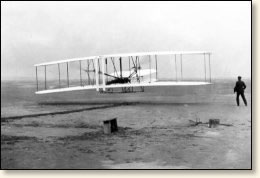
Its December 17th 1903 and the Wright Brothers have just taken the machine you see on the right into the sky for 120 glorious feet. This aircraft lies at the bottom end of the scale where science and engineering dominate and artistic merit is irrelevant. Just getting the thing to fly was 100% of the challenge and so 100% of the plane was function and not form.Wood, Canvas and pulleys were the materials used during this time and this further limited the shapes and forms an aircraft could take to small and boxy designs.

Art Claws Back Some Ground

Before I go on I want you took look at the two images below. The first image is of a Spitfire from WW2, the second is a faithful scale model, one of which now sits on my desk.

Flying high: The Spitfire in the air soaring through the clouds
Image taken from the Daily Mail

Spitfire Metal Model Aircraft
Image taken from Tailwinds

To many aviation enthusiasts this is one of the most evocative and beautiful machines ever constructed by man. Here is what I thinks is the quintessential example of art fighting back against functional design. Not a single component of this aircraft looks like the 1903 Wright Flyer above apart from that it has wings. The incorporation of lightweight and strong metals allowed for single wings to be built, engines went from modified car motors to powerful generators of horsepower and overall size increased. Aircraft designers could finally experiment and produce planes (that were essentially aerial gun platforms) that pleased not just the engineers' eye but the eye of the general public. The Spitfire shows how changes in materiel sciences changed the path of aviation, and don't forget, only 33 years separate these two aircraft.


Artistic Freedom Arrives

While the final aircraft in this lineup does not yet exists, it hints towards the potential future of aeronautical design. The AWWA Sky Whale Concept (yep you read that correctly) incorporates both current and future materials such as carbon nantubes, advanced ceramics and alloys to create shapes never seen before. While Beauty truly is in the eye of the beholder, there's no doubt that the blending of sharp angles and curvaceous undulations and sweeps makes for an catching aesthetic. None of the looks of this future concept would be possible without the aforementioned mediums providing strength gains and weight reductions improving efficiency - the ongoing golden term of current and future aeronautical development.

AWWA Sky Whale Concept Plane by Oscar Viñals

We are now looking at a future where if it can be drawn, it probably can be built and flown. This is a world away from those flimsy wooden aircraft that first took to the sky 112 years ago and only time will tell where plane design goes next.

This marks the end of a 2 part blog series on the blending of science and art but don't worry, more content on many other topics will be coming soon.

Thanks for reading!


Thursday, July 30, 2015

The Synergy of Art and Science Part 1

I recently had an enlightening experience at MUMA at Monash University Caulfield. It was interesting mainly because I have never truly considered art and thought about its significance, meaning and message. I'll openly admit that I am not one for artistic appreciation, however from the MUMA visit I did take away one key message, the Sciences need Art.

As Science and technology advance it is more important than ever that it is appealing, Particularly in the public space where looks can be everything. I recently was lucky enough to take ownership of a new Mazda 3.  During the process of reading through the brochure and between all of the marketing flim-flam I noticed that the car and the brand itself used something called KODO or 'Soul of Motion' as the basis for their automotive design. Searching further I was fascinated by how much time and effort was dedicated to turning a functional machine into a piece of stationary art that looks like its always on the move. It was eye opening, particularly for someone as artistically deficient as myself, when I began to see subtle design features and what can only be described as artistic methods put together on something as mundane as a car.

Image: https://www.mazda.com.au/about-mazda/promos-apps/

The things we buy don't just have to work well but fulfil the artistic component of our conscience. Art really is emotion embodied in tangible objects. And the Mazda is but one of many examples of this artistic rendition of technology

This Blog is part 1 of a 2 part series which I want to use to discuss how science and art work together in synergy. Part 2 will be uploaded very soon!

For more examples have a look at these links:
Apple Macbook - https://www.apple.com/au/macbook/
Monash green chemical futures building - image
more information on this building